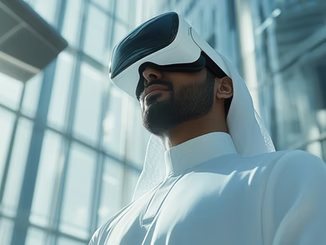
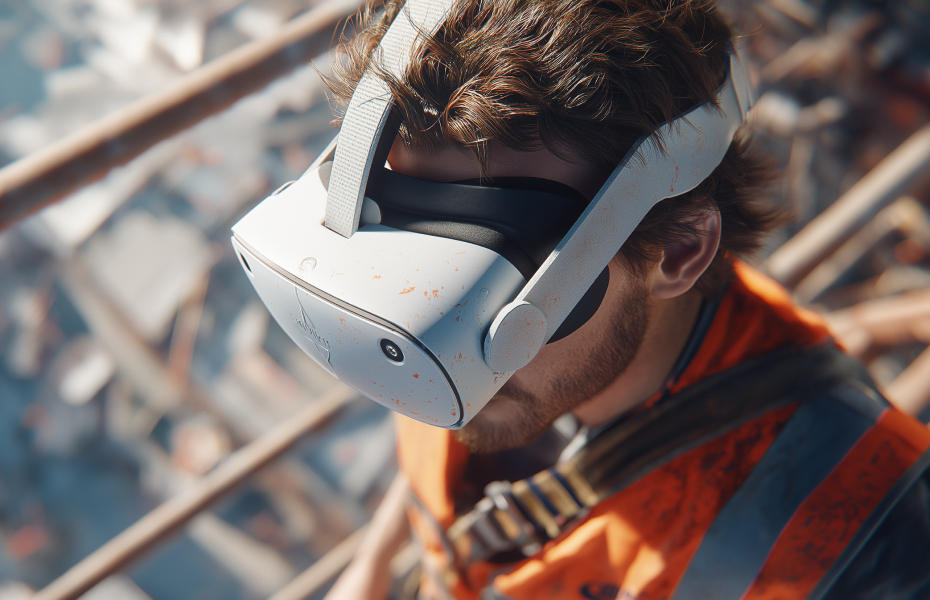
Immersive learning solutions are completely changing how we think about training. It's about time. I've watched companies struggle with boring PowerPoints and outdated training videos for years. They wonder why their employees aren't retaining information or applying skills effectively.
The old way just isn't cutting it anymore. People need to actually experience what they're learning. They shouldn't just sit through another presentation where half the room is checking their phones.
Core Technologies and Market Growth
Let me break this down for you in simple terms. Immersive learning solutions use technologies like Virtual Reality (VR), Augmented Reality (AR), Mixed Reality (MR), and AI. These create training experiences that feel real.
Think about it this way. Instead of reading about how to handle a medical emergency, you're actually in a virtual hospital room. You're making split-second decisions. The difference in learning retention is massive.
Market Statistics
The market tells us everything we need to know. We're looking at growth from USD 3.34 billion to USD 10.44 billion by 2032. That's not just growth. That's explosive demand.
Companies aren't throwing money at this technology for fun. They're seeing real results that traditional training methods simply can't deliver.
Advantages Over Traditional Training
Here's what makes immersive learning solutions so powerful:
- Learning by doing - You're not just watching someone else do it
- Safe failure environment - Make mistakes without real-world consequences
- Immediate feedback - Know instantly if you're getting it right
- Consistent experience - Every trainee gets the same high-quality training
- Cost reduction - No need for expensive equipment or dangerous scenarios
Healthcare Training Applications
Healthcare is where immersive learning really shines. I've seen surgeons practice complex procedures hundreds of times in VR. They do this before ever touching a real patient.
A UCLA study showed surgical training effectiveness increased by 230%. This was compared to traditional methods. That's not a small improvement. That's revolutionary.
Surgical Simulation and Patient Care
Imagine learning to perform surgery without risking anyone's life. That's exactly what VR surgical simulation provides.
New doctors can practice the same procedure over and over. They make mistakes and learn from them in a completely safe environment. The muscle memory they develop transfers directly to real operations.
Medical Education and Diagnostic Skills
Medical students are using AR to see inside virtual patients. They understand anatomy in ways textbooks never could provide. They're diagnosing rare conditions they might not see for years in real practice.
This isn't just cool technology. It's creating better doctors faster.
Manufacturing and Engineering Training
Manufacturing has some of the highest stakes when it comes to training. One mistake on a factory floor can shut down production for days. It can even cause serious injuries.
Immersive learning solutions let workers practice on expensive machinery. They do this without the risk of breaking anything or getting hurt.
Equipment Operation and Safety
New employees can learn to operate complex machinery in VR. They make every possible mistake in the virtual world. They do this before touching the real equipment.
Research shows VR training significantly reduces training time while improving competency scores. The ROI is immediate and measurable.
Technical Maintenance and Compliance
Maintenance procedures that used to require shutting down entire production lines can now be taught in VR. Workers practice until they're perfect. Then they apply those skills to real equipment.
Compliance training becomes engaging. It's no longer the usual checkbox exercise that everyone dreads.
Aviation and Aerospace Applications
Pilots have been using flight simulators for decades. But modern immersive learning takes this to the next level.
We're talking about full-scale emergency scenarios. These would be impossible or dangerous to recreate in real life.
Flight Simulation and Emergency Response
Modern VR flight training can simulate weather conditions, equipment failures, and emergency situations. Pilots might never encounter these in their actual careers.
But when they do face these situations, they're ready. The training feels so real that the muscle memory transfers perfectly. The decision-making processes transfer perfectly to actual aircraft.
Maintenance Operations and Technical Skills
Aircraft maintenance requires precision. This precision can mean the difference between life and death. VR training lets technicians practice on virtual aircraft. They learn every bolt and wire without grounding expensive planes.
They can practice rare maintenance scenarios repeatedly. These scenarios become second nature.
Retail and Customer Service Training
Here's where things get interesting. Retail might not seem like an obvious fit for immersive learning. But the results speak for themselves.
Strivr reported a client saw a 10% increase in customer satisfaction scores. This happened within six months of implementing VR customer service training.
Customer Interaction and Brand Training
VR lets retail employees practice difficult customer interactions. They don't have the pressure of real customers watching. They can handle angry customers, practice upselling techniques, and learn brand messaging in realistic scenarios.
The confidence they gain in the virtual world translates directly to better real-world performance.
Sales Skills and Product Knowledge
Instead of memorizing product specifications from manuals, sales teams can interact with virtual products. They understand features and benefits on a deeper level.
They practice sales conversations until they become natural, not scripted.
High-Risk Industry Applications
Oil and gas, construction, and defense industries deal with scenarios where mistakes can be catastrophic. Traditional training often can't replicate the high-stress, high-stakes environment these workers face.
Immersive learning solutions change that completely.
Construction workers can experience virtual building collapses. They learn evacuation procedures without actual danger. Oil rig workers practice emergency shutdowns in scenarios that would be impossible to create safely in real life.
These simulations also enhance hazard recognition skills by exposing workers to dangerous situations repeatedly. The adrenaline and decision-making pressure feel real. But nobody gets hurt during training.
Financial Services and Corporate Development
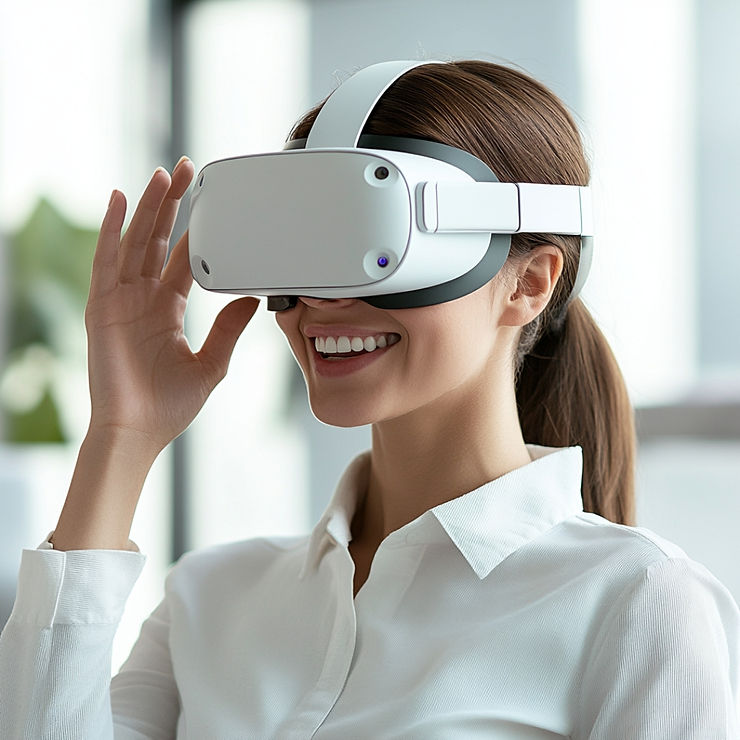
Banks and financial institutions are using VR for everything from robbery response training to complex financial product education.
Research shows VR training significantly reduces training time while improving knowledge retention scores across the board.
Soft Skills and Leadership Development
Leadership training in VR puts managers in realistic workplace scenarios. They handle difficult conversations, manage team conflicts, and make tough decisions under pressure.
They practice these skills until they become instinctive, not theoretical.
Compliance and Regulatory Training
Regulatory compliance training is notoriously dry and ineffective. VR makes it engaging by putting employees in realistic scenarios where compliance matters.
Instead of reading about regulations, they experience the consequences of following or ignoring them.
Implementation Strategy and Planning
Let's get practical. You're probably wondering how to actually implement immersive learning solutions in your organization.
Research shows the key is starting smart, not starting big.
Technology Selection and Budget Planning
Industry analysis shows you shouldn't get caught up in having the latest technology. Focus on what solves your specific training problems.
Start with pilot programs in high-impact areas. Measure results. Then scale what works.
Budget considerations include:
- Hardware costs including headsets, computers, tracking systems
- Content development or licensing
- IT infrastructure upgrades
- Training for trainers
- Ongoing maintenance and updates
Integration with Existing Systems
Your new immersive learning platform needs to play nice with your existing Learning Management System. Data should flow seamlessly between systems.
Employee progress, completion rates, and performance metrics should integrate with your current reporting structure.
ROI Measurement and Success Metrics
Here's what actually matters when measuring success:
- Training time reduction - How much faster do people learn?
- Knowledge retention - Do they remember what they learned?
- Performance improvement - Are they better at their jobs?
- Cost savings - What are you saving on traditional training costs?
- Engagement scores - Are people actually enjoying the training?
Future Technology Trends
Research indicates the future of immersive learning is getting even more exciting. We're seeing developments that will make today's technology look primitive.
AI-Powered Personalization
AI is starting to customize training experiences based on individual learning patterns. The system learns how you learn best and adapts accordingly.
Some people learn better with visual cues. Others need hands-on practice. AI figures this out and personalizes the experience.
5G Connectivity Enhancements
5G is removing the last barriers to truly seamless immersive experiences. Cloud-based processing means lighter headsets and more complex simulations.
Training can happen anywhere, not just in dedicated VR rooms.
Metaverse Training Applications
The metaverse isn't just hype. It's creating persistent virtual training environments where teams can collaborate from anywhere in the world.
Imagine having your entire training facility exist virtually. It's accessible 24/7 from anywhere.
Conclusion
The data doesn't lie. Immersive learning solutions are transforming how organizations train their workforce across every major industry. From 230% improvements in surgical training to 10% boosts in customer satisfaction scores, the results speak for themselves.
We're looking at a market that's growing from $3.34 billion to over $10 billion by 2032. That kind of explosive growth doesn't happen by accident. It happens because companies are seeing real, measurable returns on their training investments.
The question isn't whether immersive learning will become mainstream. It already is. The question is whether your organization will be an early adopter or play catch-up later.
If you're ready to explore how VR training can transform your workforce development, companies like Next World XR are already helping organizations implement comprehensive immersive learning solutions. They offer everything from VR safety training libraries to soft skills development programs, with support for multiple languages and industries.
The bottom line is simple. Immersive learning solutions aren't just the future of training. They're the present reality for companies serious about developing their workforce effectively.
Frequently Asked Questions (FAQs)
1. What industries benefit most from immersive learning solutions?
Healthcare, manufacturing, aviation, oil and gas, construction, and financial services see the biggest impact. Any industry dealing with high-risk situations benefits significantly. So do industries with expensive equipment or complex procedures.
2. How much does it cost to implement VR training programs?
Costs vary widely based on scope and complexity. Basic VR training setups start around $10,000 to $50,000 for small teams. Enterprise solutions can range from $100,000 to $500,000. The key is calculating ROI based on reduced training time and improved outcomes.
3. Do employees actually enjoy VR training more than traditional methods?
Absolutely. Engagement scores consistently show 85% to 95% satisfaction rates with VR training. This compares to 40% to 60% for traditional classroom training. People learn better when they're engaged and having fun.
4. How long does it take to see results from immersive training programs?
Most companies see immediate improvements in engagement and knowledge retention. Measurable performance improvements typically show up within 3 to 6 months. Full ROI is realized within 12 to 18 months for most implementations.
5. Can immersive learning work for remote teams?
Yes, modern VR training platforms are designed for remote deployment. Employees can train from home or satellite offices. They still get the same high-quality experience. Cloud-based platforms make remote training seamless and cost-effective.
Author:
.png)
Next World
Share Article:
Author:
Next World
Share Article: