
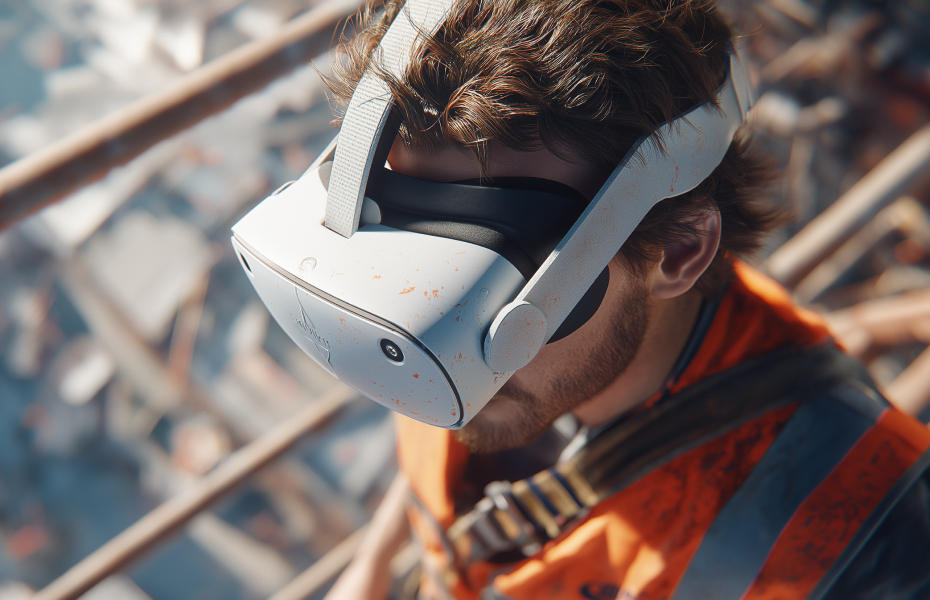
Managing health and safety in construction is one of the most demanding responsibilities in any high-risk industry. The combination of heavy equipment, elevated work platforms, confined spaces, and constantly changing site conditions creates an environment where lapses in compliance can have fatal consequences.
Regulations exist to protect workers, but the real challenge has never been the rules themselves. It is making sure every person on site understands them, follows them, and can apply them under pressure. Virtual reality education is emerging as one of the most effective ways to bridge that gap between regulatory knowledge and real-world compliance.
The Compliance Challenge on Construction Sites
Construction companies operate under strict regulatory frameworks designed to protect workers from the most common causes of injury and death on site. These frameworks cover everything from fall protection and scaffolding standards to electrical safety, hazardous substances, personal protective equipment, and confined space procedures.
The obligations are extensive and detailed, but the practical reality of achieving consistent compliance across a large and often transient workforce is far more difficult than it looks on paper.
Workers arrive on site with varying levels of experience, language proficiency, and training history. Subcontractors bring their own safety cultures, which may not align with the standards expected by the principal contractor. Site conditions change daily as projects move through different phases, and new hazards emerge that require immediate attention.
In this environment, traditional compliance training methods such as classroom sessions, printed handouts, and sign-off sheets struggle to deliver the depth of understanding that genuine safety performance requires.
Why Traditional Training Falls Short
Most construction safety training follows a familiar pattern. Workers attend an induction session, sit through a presentation, and sign a document confirming they have received the information.
Refresher training follows a similar format at scheduled intervals. While these methods satisfy the administrative requirements of a compliance program, they rarely produce lasting behavioral change.
The fundamental limitation is passive delivery. Workers listen, but they do not practice. They read about hazard controls, but they do not apply them in a realistic context. Research in occupational learning consistently shows that active participation produces significantly stronger retention than passive instruction. When the stakes involve life and death, the gap between hearing about a procedure and knowing how to execute it under stress is a gap that traditional methods leave wide open. This is where VR training benefits become most apparent, offering a level of engagement and retention that conventional approaches cannot match.
How VR Education Strengthens Compliance
Virtual reality training addresses the core weakness of traditional safety education by replacing passive instruction with immersive, hands-on experience. Workers put on a headset and step into a realistic construction environment where they must identify hazards, follow procedures, and make decisions that reflect the exact challenges they face on a live site.
The value for compliance is immediate and measurable. Rather than asking workers to recall what they were told in a classroom, VR places them in situations where they must demonstrate competency.
Can they complete a confined space entry sequence correctly? Do they select the right fall protection equipment for the task? Can they identify an uncontrolled electrical hazard before it causes harm? The simulation provides instant feedback, and performance data is captured for every session.
This data is a powerful compliance tool. Safety managers can identify which workers have met the required standard and which ones need additional coaching. They can track competency trends across teams, shifts, and project phases.
Instead of relying on attendance records as a proxy for training effectiveness, organizations gain direct evidence that workers can actually perform the safety-critical tasks they have been trained on.
Reducing Incidents Through Experiential Learning
Compliance is not just about meeting regulatory requirements. It is about preventing incidents. The strongest safety programs go beyond minimum standards and build a workforce that instinctively recognises risk and responds correctly. VR education supports this by creating experiences that engage workers emotionally and cognitively in ways that traditional training cannot.
When a worker practices atmospheric testing in a virtual confined space and sees the consequences of skipping a step, that experience stays with them. When they inspect a scaffold in VR and miss a critical defect, the simulated outcome reinforces why the inspection matters.
When they attempt a lockout tagout sequence and fail to verify isolation, the virtual result drives home a lesson that no slideshow can deliver. These emotional connections to safety procedures are exactly what drive behavioral change on site.
Workers do not just know the rule. They understand why the rule exists, because they have experienced what happens when it is not followed.
Platforms like Next World deliver this kind of scenario-based training across a range of high-risk construction activities. By integrating immersive simulations into their broader QHSE management systems, organizations can align their training programs with quality, health, safety, and environmental objectives in a way that produces genuine, measurable results.
Building Competency Across a Diverse Workforce
One of the persistent challenges in construction health and safety management is the diversity of the workforce. Large construction projects bring together workers from different trades, companies, experience levels, and cultural backgrounds.
Ensuring that every person on site has the same baseline understanding of safety procedures is a significant logistical and educational challenge.
VR training addresses this in several ways. First, immersive simulations reduce the dependence on language. Workers learn by doing rather than by reading or listening, which makes the training accessible to those with limited literacy or language proficiency in the primary site language.
Second, VR delivers a consistent training experience every time. Unlike instructor-led sessions, where the quality of delivery can vary depending on the trainer, a VR module presents the same content, the same scenarios, and the same assessment criteria to every worker.
Third, VR accommodates different learning speeds without creating bottlenecks. Workers who need more time to master a procedure can repeat the simulation as many times as necessary.
Those who demonstrate competency quickly can move on without waiting for the rest of the group. This flexibility makes it practical to deliver high-quality health and safety training at scale, even on projects with hundreds of workers cycling through inductions and refresher courses.
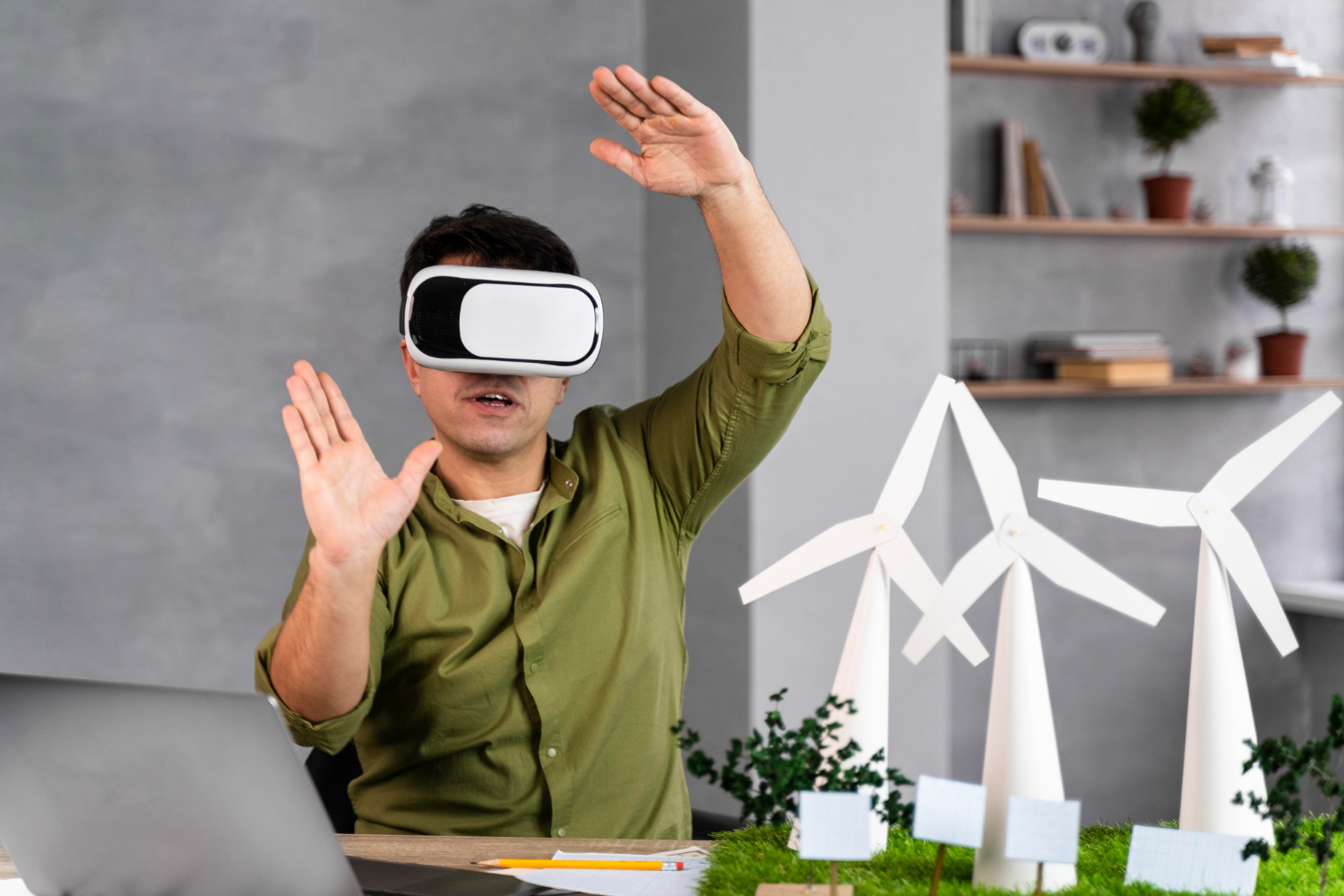
Integrating VR Into Your Safety Management System
Adopting VR education does not require replacing your existing safety management framework. The most effective approach is to integrate VR as a practical training layer within your current system.
Use your risk assessments and safe work method statements to identify the highest-priority training needs, then deploy VR modules that target those specific hazards and procedures. Start with the areas where incidents are most frequent or consequences are most severe, and expand the programme as you see results.
The performance data generated by VR sessions feeds directly into your compliance reporting. You can demonstrate to regulators, auditors, and clients that your workers have not only attended training but have been assessed against defined competency standards.
This evidence-based approach to construction safety management strengthens your compliance position far beyond what attendance-based records can achieve.
For organisations looking to build a comprehensive approach to safety skills training, VR provides the practical training component that complements classroom theory, toolbox talks, and on-the-job mentoring. Together, these elements create a safety management system that is both rigorous and effective.
Frequently Asked Questions (FAQs)
1. What Does Health and Safety Management in Construction Involve?
Health and safety management in construction involves identifying workplace hazards, implementing control measures, ensuring regulatory compliance, providing effective training, and maintaining documentation that demonstrates due diligence. It requires ongoing attention as site conditions and project phases change.
2. How Does VR Improve Construction Safety Compliance?
VR improves compliance by replacing passive instruction with active, scenario-based training. Workers practise safety procedures in realistic simulations and receive immediate feedback on their performance. The data captured during each session provides measurable evidence of competency, giving safety managers a clear picture of workforce readiness and areas that need attention.
3. Can VR Training Satisfy Regulatory Requirements?
VR training can form part of a compliant training programme when it is aligned with the relevant units of competency and regulatory standards. It is most effective as a complement to existing training methods, providing the practical demonstration component that regulators increasingly expect to see.
4. What Construction Safety Topics Can Be Covered With VR?
VR simulations cover a wide range of construction safety topics including working at heights, confined space entry, fire safety, hazard identification, manual handling, lockout tagout, and equipment operation. Modules can be tailored to reflect specific site conditions and project requirements.
5. How Does VR Training Support Construction Health and Safety Management?
VR training supports managing health and safety in construction by providing consistent, measurable, and repeatable training experiences. It builds genuine competency through practice rather than passive learning, and generates performance data that strengthens compliance reporting and identifies areas for targeted improvement.
Author:

Share Article:
Author:
Share Article: