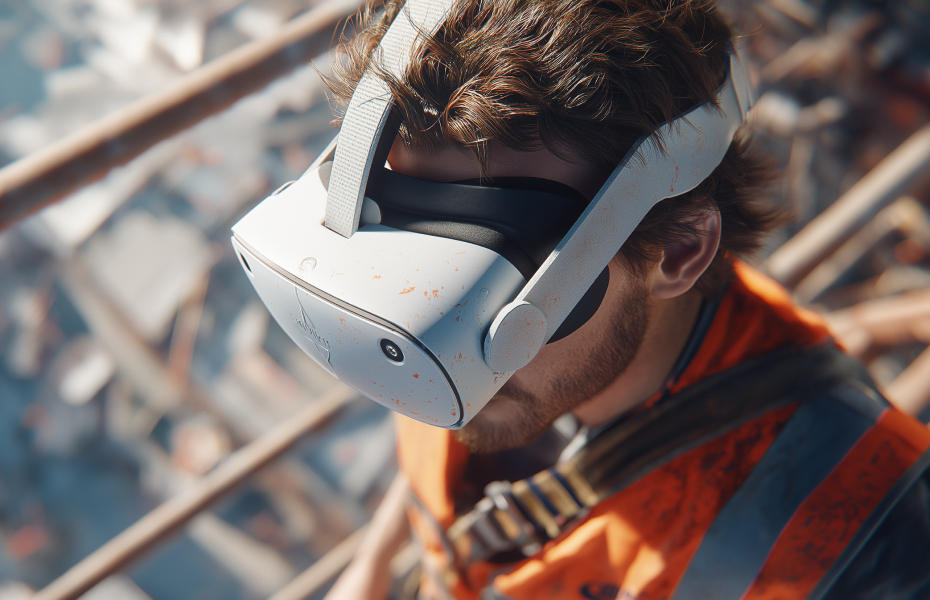
A virtual training company does more than deliver content, it transforms how employees learn critical safety skills without putting anyone at risk. Traditional safety training relies on lectures, videos, and the occasional demonstration. People zone out, forget the material, and make costly mistakes when real situations arise.
The best virtual training company solutions place employees inside realistic scenarios where they practice responding to emergencies, operating dangerous equipment, and making split-second decisions. They fail safely, learn from mistakes immediately, and build confidence before facing actual hazards.
This shift matters because workplace accidents cost companies billions annually in lost productivity, insurance claims, and damaged equipment. Immersive learning addresses these problems directly by creating muscle memory and decision-making patterns that stick.
How Modern Companies Approach Safety Education
Safety training has evolved dramatically over the past decade. What once required dedicated facilities, expensive equipment, and constant instructor availability now happens anywhere with a VR headset.
Early workplace safety programs consisted of classroom lectures and written tests. Employees memorized procedures without understanding how to apply them under pressure. Hands-on training helped but created new risks, exposing trainees to actual hazards while they learned.
Virtual training companies changed this equation. They build digital replicas of work environments where employees encounter realistic challenges without real consequences. A construction worker practices fall protection at virtual heights. A chemical plant operator responds to simulated leaks and spills. According to OSHA research, immersive training significantly improves hazard recognition and safety protocol adherence compared to traditional methods.
The technology captures performance data that traditional training never could. Systems track where employees look, how quickly they respond, which safety steps they skip, and where confusion occurs. This feedback loop drives continuous improvement in both training content and individual performance.
Why Simulation Accelerates Skill Development
Realistic practice beats passive learning every time. Virtual training company platforms create high-stakes scenarios that engage multiple senses and require active decision-making.
The brain processes simulated experiences similarly to real ones. When an employee practices emergency shutdown procedures in VR, their nervous system responds as if facing an actual emergency. Heart rates increase, stress hormones activate, and muscle memory forms. This physiological engagement creates stronger neural pathways than watching videos or reading manuals.
Repetition without risk amplifies this effect. Employees can practice the same scenario dozens of times, encountering variations and edge cases they might never experience in years of actual work. A maintenance technician troubleshoots equipment failures repeatedly until diagnosis becomes intuitive. A healthcare worker manages patient emergencies until proper protocols become automatic.
Next World's platform leverages these principles with adaptive scenarios that adjust difficulty based on performance. Employees master foundational skills before advancing to complex situations, ensuring comprehensive competency development.
What Sets Leading Virtual Training Companies Apart
Not all virtual training solutions deliver equal results. The best platforms combine several critical capabilities that directly impact safety outcomes and business performance.
Cost efficiency matters significantly. Traditional safety training requires dedicated facilities, equipment, instructors, and often taking production lines offline. Virtual training eliminates most of these expenses after initial development. One training module serves unlimited employees across unlimited locations with minimal ongoing costs.
Safety improvement is measurable and substantial. Companies using immersive safety training report 30-50% reductions in workplace incidents within the first year. Employees who've practiced emergency responses in VR react faster and more appropriately when real situations occur.
Employee readiness accelerates noticeably. New hires reach full productivity weeks faster when training includes immersive simulation. They've already practiced core tasks repeatedly before touching actual equipment or working with real materials. Research from Training Industry shows VR-trained employees complete tasks 30% faster than traditionally trained counterparts.
Engagement levels rise dramatically compared to conventional training methods. Employees actually enjoy VR training sessions, leading to better attendance, higher completion rates, and more thorough knowledge retention. The interactive nature prevents the mind-wandering that plagues lecture-based programs.
Where Immersive Safety Training Delivers Maximum Impact
Certain industries face safety challenges that make virtual training especially valuable. High-risk environments with expensive equipment and serious injury potential benefit most from risk-free practice opportunities.
Manufacturing facilities use virtual training for machine operation, lockout-tagout procedures, and emergency response protocols. Workers practice on digital twins of actual production equipment, learning proper techniques before touching real machinery worth millions of dollars.
Construction sites present constant hazards from heights, heavy equipment, electrical systems, and structural risks. Virtual training company solutions let workers practice fall protection, equipment operation, and hazard identification in realistic job site replicas. They experience dangerous situations safely while building situational awareness.
Healthcare environments require precise procedures under pressure. Medical professionals practice patient care, emergency responses, and proper use of specialized equipment through immersive simulation. Next World's healthcare solutions enable surgical teams to rehearse complex procedures and nurses to manage critical situations before working with actual patients.
Energy sector operations involve extreme temperatures, high pressures, toxic materials, and explosive risks. Virtual training lets technicians practice shutdown procedures, leak response, and equipment maintenance in simulated refineries and power plants that mirror their actual work environments.
Proving the Business Value of Immersive Learning
Financial justification drives adoption decisions. Smart companies measure specific outcomes that demonstrate clear return on investment from virtual training company partnerships.
Training efficiency improvements show up immediately. Employees complete immersive training programs 40-60% faster than traditional programs while demonstrating superior competency. Reduced training time means less time away from productive work and faster onboarding for new hires.
Engagement metrics reveal dramatic differences. VR training sees 90%+ completion rates compared to 30-50% for video-based programs. Employees retain information longer, with studies showing 75% retention after one year versus 10-20% from lectures.
Safety compliance outcomes provide the most compelling data. Companies track incident rates, near-miss reports, and safety audit scores before and after implementing immersive training. Industry research from PwC documents that VR-trained employees are four times more focused than e-learning participants and 275% more confident applying learned skills.
Insurance carriers increasingly recognize these benefits with premium reductions for companies demonstrating robust immersive safety training programs. The combination of fewer claims and documented risk mitigation creates ongoing financial advantages.
Solving Problems Traditional Training Cannot Address
Conventional safety training faces inherent limitations that immersive technology overcomes. Understanding these gaps explains why forward-thinking companies choose virtual training company solutions.
Hazardous skill practice becomes possible without exposure. Traditional training either exposes trainees to actual dangers or skips hands-on practice entirely. Neither approach optimally prepares employees. Virtual environments let workers experience and respond to dangers repeatedly without risk.
Expensive equipment access opens up for all trainees. When training equipment costs millions of dollars, companies limit hands-on time or use outdated machines for practice. Virtual training eliminates these constraints, giving every employee unlimited practice time on exact digital replicas of current equipment.
Rare emergency scenarios become routine practice. Most workers never experience serious emergencies, meaning they're unprepared when incidents occur. Immersive training exposes everyone to critical situations multiple times, building response patterns that activate automatically under stress.
Human error patterns surface and get corrected. Virtual systems identify where employees consistently make mistakes, struggle with procedures, or skip safety steps. This visibility enables targeted coaching and content refinement that traditional training never provides.
Building Your Immersive Safety Training Program
Successful implementation follows a structured approach. Companies that plan carefully see faster adoption, better outcomes, and smoother integration with existing programs.
Start by identifying high-priority training needs where immersive learning delivers maximum value. Look for areas with high injury rates, expensive equipment, complex procedures, or low traditional training effectiveness. Focus initial efforts where success will be most visible and impactful.
Evaluate technology options based on your specific requirements. Consider whether you need mobile standalone headsets for field training or high-end systems for complex simulations. Next World offers flexible deployment options that scale from pilot programs to enterprise-wide implementations.
Develop or acquire content aligned with your operations. Off-the-shelf modules work for common scenarios like fall protection or hazmat response. Custom content replicates your specific equipment, facilities, and procedures. Most companies benefit from combining both approaches.
Launch with a pilot group representing diverse roles and skill levels. Test with early adopters who'll provide honest feedback while also serving as champions. Run the pilot for 6-8 weeks, collecting performance data and user experience insights. Refine content and processes based on these learnings.
Integrate with existing safety management systems. Connect VR training data to your LMS, competency tracking, and safety compliance records. Ensure virtual training complements rather than duplicates other programs. Build clear pathways from virtual practice to supervised real-world application.
Scale methodically across departments and locations. Use successful pilot participants as trainers and advocates. Address technical support, equipment maintenance, and content updates before expanding too quickly.
What's Next for Virtual Training Technology
Virtual training companies continue innovating rapidly. Emerging capabilities will further improve outcomes and expand applications in coming years.
Artificial intelligence enables personalized learning paths that adapt in real-time. Systems will analyze individual performance patterns and adjust scenarios, pacing, and difficulty automatically. Employees who struggle with specific procedures get additional focused practice. Fast learners advance to complex challenges without waiting.
Advanced data analytics transform safety management. Aggregated performance data reveals systemic issues, common failure points, and training gaps across entire organizations. Safety managers identify problems proactively rather than reacting to incidents.
Haptic feedback technology adds physical sensation to virtual experiences. Employees will feel resistance when operating equipment, pressure when securing connections, and vibration from machinery. This tactile dimension strengthens skill transfer from simulation to real work.
Mixed reality combines virtual elements with physical environments. Workers practice procedures using actual tools while virtual overlays provide guidance, simulate hazards, and track technique. This hybrid approach bridges the gap between pure simulation and real-world application.
Why Next World Stands Above the Competition
Next World has established itself as the premier virtual training company through technological innovation, proven results, and comprehensive support. The platform addresses real business needs with practical solutions that scale.
The technology foundation delivers superior experiences. Advanced rendering creates photorealistic environments that increase presence and engagement. Intuitive interfaces work for all employees regardless of technical background. Cross-device compatibility means one training module works across different headset types and capabilities.
Proven safety outcomes distinguish Next World from alternatives. Partner companies document measurable reductions in workplace incidents, faster emergency response times, and improved safety audit scores. These results come from evidence-based instructional design combined with engaging immersive experiences.
Global reach with local support ensures successful implementations worldwide. Next World serves clients across continents while providing responsive technical support, content customization, and ongoing optimization. The platform supports multiple languages and adapts to regional safety requirements and cultural contexts.
Continuous innovation keeps client programs current. Regular platform updates introduce new capabilities without requiring content redevelopment. Next World invests heavily in research, staying at the forefront of immersive learning technology and safety training effectiveness.
Conclusion
Choosing the right virtual training company transforms safety education from a compliance checkbox into a competitive advantage.
Organizations that embrace immersive learning see measurable improvements in employee readiness, workplace safety, and operational efficiency.
Frequently Asked Questions (FAQs)
1. How Much Does Virtual Training Company Services Cost?
Initial investments typically range from $30,000 to $100,000 for pilot programs including hardware, platform licensing, and initial content development. Ongoing costs run $50-200 per user annually for software licensing. Custom content development adds $20,000-150,000 depending on complexity. Most organizations achieve positive ROI within 12-18 months through reduced training costs, fewer incidents, and faster employee readiness.
2. Can Virtual Training Replace All Traditional Safety Training?
Virtual training excels at procedural skills, emergency response, and equipment operation but works best as part of comprehensive programs. Theoretical knowledge, classroom discussion, and mentored real-world practice still add value. The most effective approaches combine immersive simulation with traditional methods, using each where it delivers optimal results.
3. What Technology Infrastructure Do We Need?
Modern standalone VR headsets require minimal infrastructure, just wireless internet connectivity for content updates and data synchronization. Tethered systems need gaming-grade PCs but deliver higher visual quality. Most companies start with standalone devices for flexibility and ease of deployment. Cloud-based platforms eliminate server requirements and simplify management.
4. How Long Does Implementation Take?
Pilot programs launch in 4-8 weeks from decision to first training sessions. This includes hardware procurement, platform configuration, trainer preparation, and initial content deployment. Enterprise-wide rollouts take 3-6 months depending on organization size, number of locations, and custom content requirements. Phased approaches allow learning from early deployments before full scaling.
5. How Do We Measure Virtual Training Effectiveness?
Track multiple metrics including training completion time, competency assessment scores, knowledge retention over time, workplace incident rates, near-miss reports, safety audit results, and employee confidence surveys. Compare pre and post-implementation data. Monitor ongoing performance trends. Leading virtual training company platforms provide built-in analytics dashboards showing these metrics automatically.
Author:

Share Article:
Author:
Share Article: