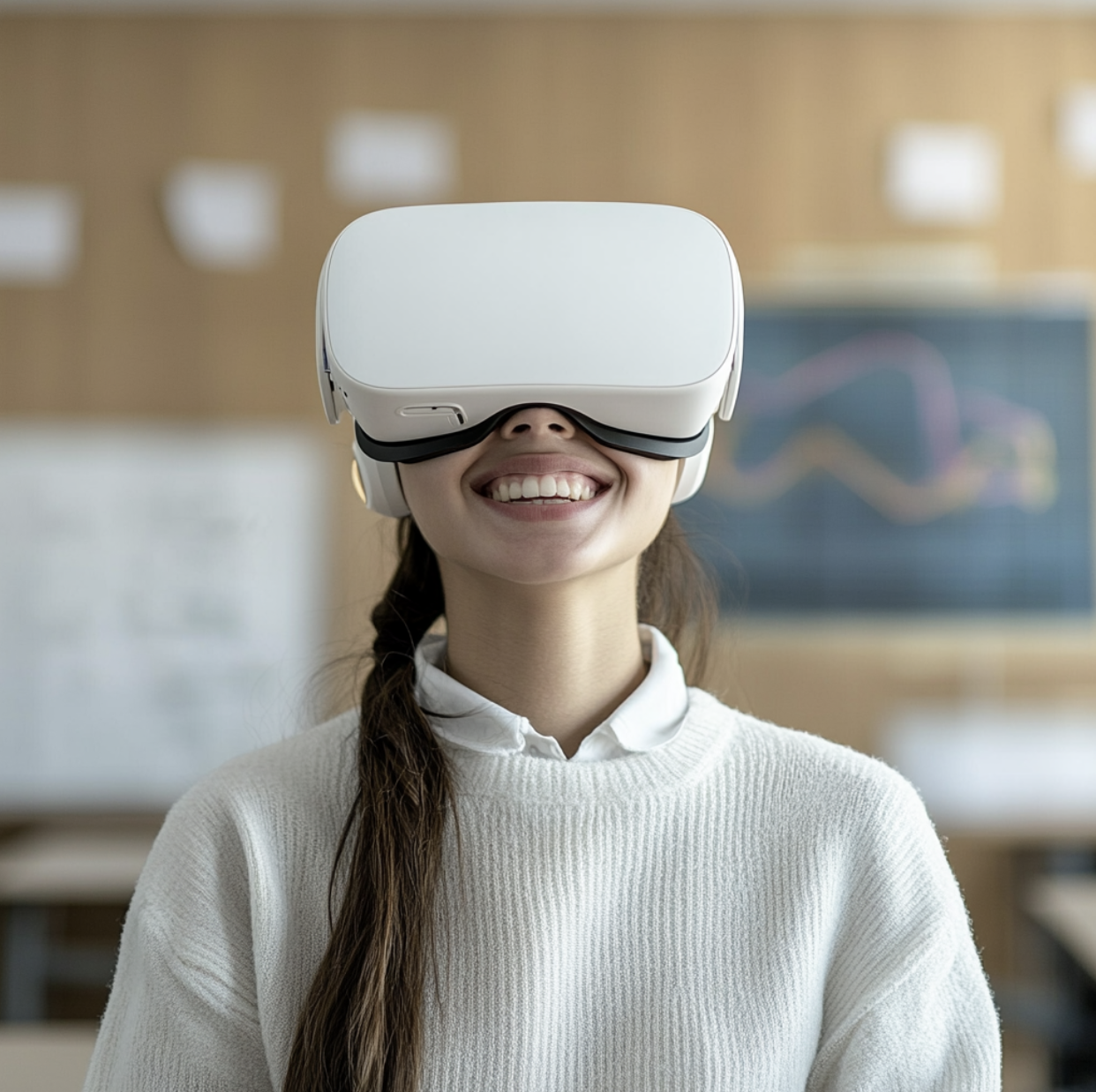
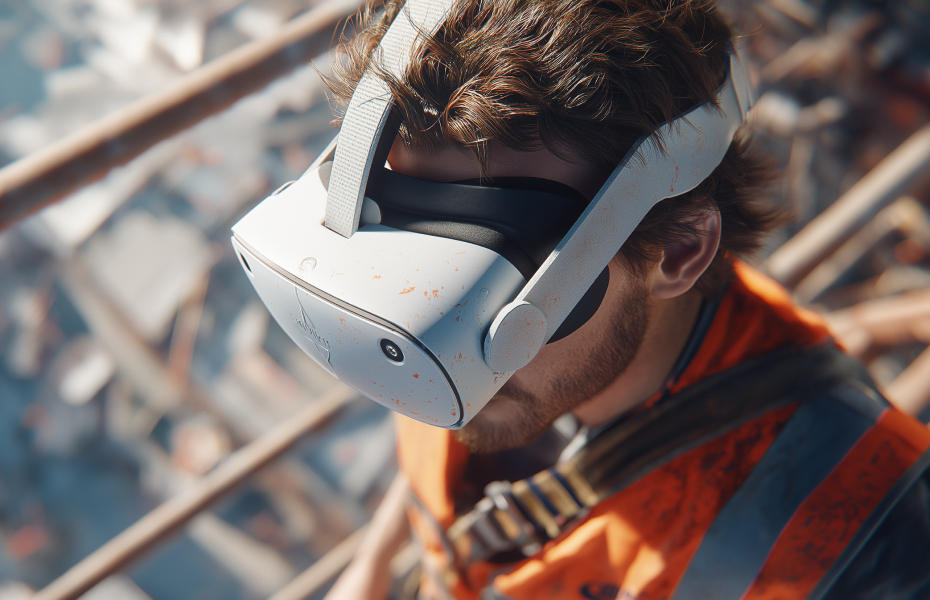
Virtual training rooms are changing the way companies approach workplace safety and employee development. If you've ever wondered whether there's a better way to train your team without putting them at actual risk, or if traditional classroom sessions just aren't cutting it anymore, you're in the right place. This technology lets people learn by doing, experiencing realistic scenarios in a completely safe environment where mistakes become learning opportunities instead of costly accidents.
The concept is straightforward. Instead of sitting through PowerPoint presentations or reading manuals, trainees put on a VR headset and step into a digital space that looks and feels like their actual workplace. They can practice operating heavy machinery, responding to emergencies, handling hazardous materials, or navigating complex procedures, all without any real-world consequences.
What Are Virtual Training Rooms?
At their core, virtual training rooms are immersive digital environments designed specifically for learning and skill development. Think of them as training facilities that exist entirely in virtual reality, where employees can practice real-world tasks in a controlled, risk-free setting.
These spaces recreate actual work environments with remarkable accuracy. A construction company might build a virtual site complete with scaffolding, equipment, and safety hazards. A healthcare facility could simulate an operating room or emergency department. Manufacturing plants can replicate assembly lines and machinery down to the smallest detail.
What makes these environments powerful is their interactivity. Trainees don't just observe, they actively participate. They can pick up tools, press buttons, move objects, and make decisions that affect the outcome of their training scenario. The system tracks their actions, provides immediate feedback, and adapts to their performance level.
How Virtual Training Rooms Work
The technology behind these training solutions combines several elements. VR headsets create the visual and spatial experience, displaying 3D environments that respond to head movements. Hand controllers or haptic gloves let trainees interact with virtual objects naturally, whether they're turning a valve, pulling a lever, or assembling components.
Behind the scenes, sophisticated software creates these environments and manages the training experience. The system can present different scenarios, adjust difficulty levels, track performance metrics, and even introduce unexpected challenges to test decision-making skills under pressure.
Some implementations include additional features like spatial audio that helps with situational awareness, haptic feedback that simulates the sensation of touching objects, and multiplayer capabilities that allow team-based training exercises.
The beauty of this setup is its flexibility. A single physical space with VR equipment can become any training environment imaginable. One moment it's a warehouse, the next it's a chemical plant, and then it transforms into a retail store. This versatility makes it practical for organizations with diverse training needs.
Benefits of Using Virtual Training Rooms
Safety First
The most obvious advantage is safety. Employees can learn to handle dangerous situations without any actual danger. A worker can practice responding to a fire, chemical spill, or equipment malfunction without facing real hazards. If they make a mistake, they simply restart the scenario and try again. No one gets hurt, and nothing gets damaged.
Cost Efficiency
Traditional training often requires taking equipment offline, consuming materials, or traveling to specialized facilities. Virtual training eliminates many of these expenses. Once the initial system is set up, you can run unlimited training sessions without ongoing material costs. There's no need to shut down production lines or risk damaging expensive equipment during training.
Better Learning Outcomes
Studies consistently show that people learn better by doing rather than just watching or reading. Virtual training rooms provide hands-on experience that builds muscle memory and confidence. Trainees can repeat scenarios until they master them, something that's often impractical or impossible with traditional methods.
The immersive nature of VR also improves retention. When someone experiences something in virtual reality, their brain processes it similarly to a real experience. This creates stronger memories compared to passive learning methods.
Consistency and Standardization
Every trainee receives exactly the same instruction. There's no variation based on instructor availability, mood, or teaching style. The training content remains consistent, ensuring everyone meets the same standards. This is particularly valuable for companies with multiple locations or high turnover rates.
Measurable Results
Virtual training systems collect detailed data on trainee performance. You can see exactly how long tasks took, which steps were performed correctly, where mistakes occurred, and how many attempts were needed to master a skill. This data helps identify knowledge gaps, track improvement over time, and demonstrate training effectiveness.
Real-World Applications
Manufacturing facilities use these systems to train workers on complex assembly processes, quality control procedures, and equipment operation. New employees can learn to operate expensive machinery without the risk of damage or injury during their learning curve.
Healthcare organizations leverage virtual training for medical procedures, emergency response, and patient interaction scenarios. Medical professionals can practice rare or critical procedures repeatedly, building competence before they ever work with real patients.
Construction and industrial sectors use VR to familiarize workers with job sites before they arrive, teach proper use of personal protective equipment, and simulate hazardous situations like confined space entry or working at heights. Explore how immersive technology transforms workplace safety in high-risk environments.
Retail and hospitality businesses create virtual stores or hotels where employees practice customer service, learn store layouts, and handle difficult situations with challenging customers.
Emergency services train responders for disasters, accidents, and crisis situations that would be impossible or extremely expensive to recreate in real life.
Getting Started with Virtual Training
Implementing this technology doesn't have to be overwhelming. Start by identifying your biggest training challenges. What scenarios are most dangerous, expensive, or difficult to recreate? Where do new employees struggle most? What skills require the most practice time?
Next, consider your infrastructure needs. Modern VR systems are increasingly accessible, with standalone headsets that don't require expensive computers. For basic applications, you might start with just a few headsets and a dedicated training space.
Content development is crucial. You'll either need to work with developers who specialize in training simulations or use platforms that let you create scenarios without coding knowledge. The key is ensuring your virtual environments accurately reflect your actual workplace and procedures.
Training your trainers is just as important as training your employees. Someone needs to understand how to set up sessions, troubleshoot technical issues, interpret performance data, and guide trainees through the experience.

Common Concerns Addressed
Some people worry about motion sickness, but modern VR systems have largely solved this issue through better hardware and thoughtful software design. Most users adapt quickly, and sessions can be structured to ease people into the experience.
Others question whether virtual skills transfer to real-world performance. Research demonstrates that when simulations are well-designed and realistic, skills learned in VR do translate effectively to actual job performance.
There's also the concern about technology replacing human instructors. In reality, virtual training works best when combined with human guidance. Instructors become facilitators who help trainees understand what they're learning and connect virtual experiences to real-world contexts.
The Future of Workplace Training
As technology advances, these training environments become more realistic and accessible. Companies like NextWorldXR are pushing boundaries, creating increasingly sophisticated simulations that blur the line between virtual and real.
We're seeing integration with artificial intelligence that creates adaptive training scenarios, responding intelligently to trainee actions and providing personalized learning paths. Mixed reality options are emerging that blend physical and virtual elements, offering even more training possibilities. Discover how custom VR development is shaping the future of enterprise learning solutions.
The technology is becoming more affordable and easier to deploy, making it accessible to smaller organizations that couldn't previously justify the investment. Cloud-based platforms are simplifying content creation and management, reducing the technical barriers to entry.
Conclusion
Virtual training rooms represent a fundamental shift in how we prepare people for their jobs. They offer a way to provide hands-on, realistic training experiences without the risks, costs, and limitations of traditional methods. As the technology continues to improve and become more accessible, it's moving from a cutting-edge option to an essential tool for organizations serious about safety, efficiency, and employee development. Whether you're training a handful of employees or thousands across multiple locations, this approach to learning delivers results that traditional methods simply can't match, making virtual training rooms an investment worth serious consideration.
Frequently Asked Questions (FAQs)
1. How much does it cost to set up virtual training rooms?
Initial costs vary widely depending on your needs, from a few thousand dollars for basic setups to larger investments for enterprise solutions. Standalone VR headsets start around $300 to $500 per unit, while custom content development can range from $10,000 to $100,000 or more depending on complexity. However, most organizations see ROI within the first year through reduced material costs, equipment damage, and improved training efficiency.
2. Do employees need special skills to use VR training systems?
No special skills are required. Most people adapt to VR within minutes, even if they've never used the technology before. The systems are designed to be intuitive, with simple controls and guided instructions. Organizations typically provide a brief orientation session to help users get comfortable with the equipment, and trainers are available to assist during sessions.
3. Can virtual training completely replace traditional training methods?
Virtual training works best as part of a blended approach rather than a complete replacement. It excels at hands-on skill development, scenario practice, and hazard awareness, but should be combined with classroom instruction, on-the-job mentoring, and real-world supervised practice. The ideal mix depends on what you're teaching and your specific training objectives.
4. How long does it take to create custom training content?
Development timelines vary based on complexity. Simple scenarios might take a few weeks to create using existing templates and tools, while fully custom, highly detailed simulations can require several months of development work. Many organizations start with off-the-shelf content or modified templates, then gradually build more customized scenarios as they identify specific needs and see results.
5. What happens if the VR equipment breaks or malfunctions during training?
Quality VR equipment is quite reliable, but having backup headsets and a maintenance plan is smart. Most business-grade VR systems come with warranties and support services. Many organizations maintain a few extra headsets to ensure training can continue if equipment needs repair. Additionally, cloud-based training platforms allow you to quickly switch devices without losing progress or data, minimizing disruption to your training schedule.
Author:

Share Article:
Author:
Share Article: